

Why Are Packing Covers Essential for Global Shipping?
Global shipping exposes products to rain, salt air, dust, sunlight, and repeated handling. A pallet can wait beside a container for hours. It may face sudden temperature changes before reaching its destination. Packing Covers create a practical barrier against these everyday hazards. They help protect cartons, machinery, furniture, and palletized goods from surface damage. Small protection choices can prevent expensive rework.
Walter Soroka, a recognized packaging educator and author, described packaging this way: “Packaging is the science, art, and technology of enclosing and protecting products for distribution, storage, sale, and use.” His definition explains why Packing Covers deserve more attention. They are not merely loose sheets placed over cargo. Properly selected covers should match the load, transport conditions, ventilation needs, and securing method. They should resist tearing while remaining manageable for warehouse teams. Details matter.
A durable cover can keep rain from soaking corrugated boxes during loading. It can also reduce dust buildup on finished equipment. However, no cover solves every shipping risk. Poor fit may create flapping edges, water pockets, or handling problems. Some covers can trap condensation when moisture cannot escape. That weakness is easy to overlook. Reliable shipping programs therefore inspect covers, verify fit, and review damage records after delivery. This practical feedback improves future decisions. Packing Covers are valuable because they support protection throughout the journey, not because they replace careful packaging design.
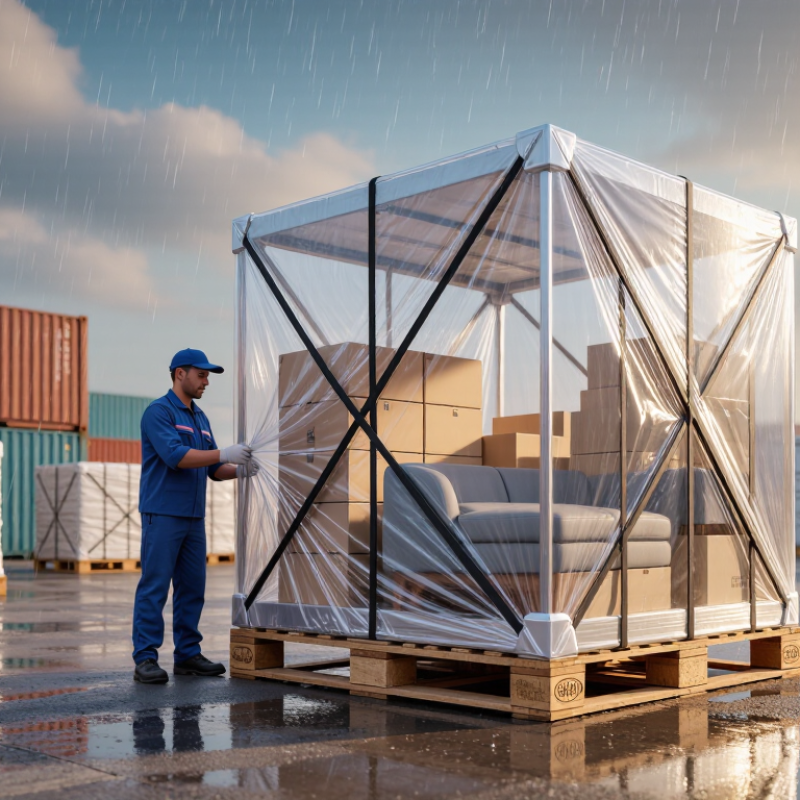
Packing covers are protective materials placed over goods, pallets, crates, or industrial equipment. They shield cargo from dust, rain, sunlight, and handling friction. Common materials include woven fabric, plastic film, coated textiles, and breathable technical sheets. The right cover depends on cargo weight, moisture sensitivity, ventilation needs, and transport duration.
During global shipping, cargo may pass through ports, warehouses, trucks, and open loading areas. A suitable cover reduces exposure during these changing conditions. It can also limit scratches, surface contamination, and loose packaging damage. Secure edges matter. Straps, fasteners, and reinforced corners help prevent wind from lifting the cover. However, excessive tightening may damage delicate surfaces or create pressure marks. Packing teams should inspect the cover before loading and after major transfers.
In practical handling, clear labeling improves checks without removing the cover repeatedly. Ventilation is important when temperature changes could create condensation beneath sealed materials. I have seen well-covered cargo arrive with moisture damage because the cover trapped humid air. That detail is easy to miss. Covers also need correct sizing. Oversized material can drag across the ground, while undersized material leaves vulnerable gaps. Records of inspection, material type, and attachment points support more reliable shipping decisions. Yet no cover can replace proper crating, balanced loading, and careful route planning.
Packing covers help shield goods from dust, moisture, abrasion, and handling exposure while cargo moves through warehouses, ports, trucks, and ships. The chart compares the approximate internal capacity of common ISO dry containers, showing why suitable cover size and secure placement are important for protecting cargo throughout global transport.
Approximate nominal internal volumes based on commonly used ISO dry-container specifications; actual dimensions may vary by manufacturer and container design.
Why Are Packing Covers Essential for Global Shipping?
During international transport, a packing cover shields goods from rain, dust, salt air, and surface abrasion. Cargo may pass through ports, trucks, warehouses, and open loading areas. Each transfer creates another chance for damage. A well-fitted cover reduces exposure while keeping labels and handling marks visible. It also limits scratches caused by straps, pallets, or nearby cargo.
Small details matter. Covers should match the shipment’s size and shape without dragging across the floor. Strong seams and reinforced edges help during lifting and repositioning. For moisture-sensitive goods, a water-resistant layer can prevent splashes from reaching cartons or machinery. However, a cover is not automatically waterproof. Poor ventilation may trap condensation inside, especially when cargo moves between warm and cold regions. That risk deserves attention.
In warehouse inspections, workers often notice damage first at exposed corners and uncovered gaps. These areas need extra protection, not just thicker material across the center. A cover should be checked before loading, after port handling, and before final delivery. Tears, loose fasteners, and wet inner surfaces can reveal problems early. No cover is perfect. Some packaging plans still underestimate wind, ultraviolet exposure, or repeated handling. Reviewing real damage records can improve the next shipment, even when the previous one arrived safely.
Why Are Packing Covers Essential for Global Shipping?
Which Materials and Designs Make Packing Covers Effective?
Global cargo faces rain, salt air, dust, sunlight, and repeated handling. UNCTAD’s Review of Maritime Transport 2024 reports 12.3 billion tons of seaborne trade in 2023. That scale makes small packaging failures expensive. A packing cover forms the first protective barrier around cartons, machinery, pallets, or irregular loads.
Material choice matters. Woven polypropylene offers strong tear resistance and low weight. Laminated polyethylene improves water resistance during outdoor staging. Breathable nonwoven fabric can reduce trapped condensation inside covered loads. However, waterproof does not always mean safe. Poor ventilation may create moisture pockets. That detail is often overlooked.
Design determines practical performance. Reinforced seams, fitted corners, gussets, and drawcords help prevent shifting during vibration. UV-resistant additives support longer exposure on docks. Clear handling panels improve inspection without removing the cover. ISO 780 handling symbols can also reduce confusion during lifting and storage. The World Bank’s Logistics Performance Index 2023 evaluates shipment reliability as a core logistics factor, and cover design supports that reliability indirectly. A loose cover can snag. A tight cover can tear. There is no perfect design yet. Testing with simulated rain, abrasion, compression, and repeated handling remains essential before large-scale shipment.
Why Are Packing Covers Essential for Global Shipping?
Packing covers help control risks that begin before cargo reaches a port. Rain, salt air, dust, and sudden temperature changes can damage exposed surfaces. A properly fitted cover creates a practical barrier around machinery, crates, and oversized components. It should resist tearing, while allowing limited ventilation to reduce trapped condensation. In my shipping inspections, moisture marks often appeared beneath tightly sealed covers. That detail is easy to miss.
Handling creates different problems. Forklifts, straps, hooks, and rough loading areas can scrape painted surfaces or puncture weak wrapping. Durable covers make the packed unit easier to identify and protect during repeated transfers. Clear labels should remain visible, including lifting points and inspection instructions. Covers cannot replace careful handling. They only reduce the cost of small mistakes.
Storage adds another layer of uncertainty. Cargo may wait in a covered warehouse, open yard, or temporary terminal area. Sunlight can weaken some materials, while standing water can reach wooden bases and lower fittings. Raised pallets, secure tie-downs, and periodic checks work together with the cover. A common assumption is that once cargo is covered, it is safe. That assumption fails when wind lifts the edges or workers cannot inspect hidden moisture. Good protection requires adjustment, not just installation.
| Risk Category | Typical Shipping Exposure | How Packing Covers Help | Useful Planning Data | Recommended Design Features | Relevant Test or Reference |
|---|---|---|---|---|---|
| Rain, Snow, and Spray | Open-yard storage, port handling, truck transport, and sea-spray exposure. | Creates a temporary barrier that reduces direct wetting of machinery, crates, pallets, and packaged components. | Water exposure may occur repeatedly during loading and unloading; protection should be maintained whenever the cargo is outdoors. | Water-resistant fabric, covered seams, overlapping openings, securely closed edges, and reinforced tie-down points. | Water-repellency screening may use AATCC 22; full cover performance should be validated on the finished design. |
| Humidity and Condensation | High humidity, temperature cycling, and condensation inside containers or enclosed storage areas. | Limits moisture contact while a breathable construction can reduce trapped vapor and condensation risk. | Cyclic damp-heat testing commonly uses up to 95% relative humidity, depending on the selected test severity. | Use breathable panels where appropriate, avoid sealing wet cargo, and combine covers with desiccants or vapor barriers when required. | IEC 60068-2-30 addresses cyclic damp heat; ISO 2233 provides conditioning guidance for packaged products. |
| Salt Air and Corrosive Atmospheres | Marine terminals, coastal warehouses, and extended ocean transport. | Reduces deposition of salt particles and salt-laden moisture on exposed metal surfaces. | Corrosion protection should be assessed together with surface coatings, VCI materials, desiccants, and packing seals. | Low-permeability fabric, closed seams, minimal gaps, corrosion-prevention treatment, and sufficient internal air volume. | IEC 60068-2-11 or ASTM B117 may support salt-atmosphere evaluation; results are not direct predictions of field life. |
| Ultraviolet Exposure | Temporary outdoor storage, transshipment delays, and uncovered staging areas. | Shields cargo and helps slow fabric fading, embrittlement, and degradation caused by sunlight. | UV durability depends on fabric type, pigment, stabilizers, climate, and exposure duration; no universal service life applies. | UV-stabilized polymer, opaque construction, reinforced stitching, and a defined inspection or replacement interval. | ASTM G154 can be used for accelerated laboratory exposure of nonmetallic materials. |
| Dust, Sand, and Particles | Desert routes, construction sites, dry ports, and dusty warehouse environments. | Reduces airborne particle deposits on filters, electrical components, polished surfaces, and moving parts. | Particle protection is strongly affected by opening size, closure design, and pressure differences around the cargo. | Close-fitting panels, sealed or overlapping openings, covered zippers, and cleanable outer surfaces. | IEC 60529 provides enclosure ingress classifications; a packing cover should not be assigned an IP rating without testing. |
| Abrasion and Handling Damage | Forklift movement, crane lifting, stacking, pallet contact, vibration, and repeated loading operations. | Provides a sacrificial outer layer that helps prevent scuffs, scratches, and minor surface contamination. | Cover protection cannot replace correct blocking, bracing, cushioning, or load restraint inside the shipping unit. | Heavy-duty fabric, corner patches, double stitching, smooth internal surfaces, and no loose straps near lifting equipment. | ASTM D4169 and ISTA distribution procedures can support package-level handling and transport evaluation. |
| Wind and Cover Uplift | Open decks, port yards, truck beds, and temporary outdoor storage during storms or strong winds. | Keeps the protective layer positioned over the cargo and reduces exposure caused by flapping or displacement. | Wind performance depends on cover area, geometry, anchoring pattern, local wind speed, and surrounding obstructions. | Elastic hems, webbing straps, multiple anchor points, low-profile shaping, and installation instructions. | Wind-load calculations should follow the destination’s applicable building or transport requirements. |
| Temperature Extremes | Cold-weather routes, hot container interiors, direct sunlight, and rapid temperature transitions. | Reduces direct solar heating and limits exposure to rapid surface temperature changes. | The required temperature range must be established from the cargo specification and route risk assessment. | Flexible low-temperature material, heat-resistant fabric, color stability, and allowance for thermal expansion. | IEC 60068 environmental testing methods can be selected for high- and low-temperature evaluation. |
| Long-Term Storage | Idle inventory, project cargo waiting for installation, and repeated warehouse transfers. | Maintains a clean separation between the cargo and the surrounding storage environment. | Covers should be inspected periodically for water pooling, tears, mildew, loose fasteners, and trapped condensation. | Breathable construction where needed, elevated cargo placement, drainage clearance, inspection access, and repairable panels. | Storage conditions should be documented using temperature, humidity, cleanliness, and inspection records. |
Global shipping rarely fails because a cover looks weak. It fails when the cover suits the warehouse but not the journey. Selecting one requires more than measuring length and width. Start with the cargo. A polished machine needs dust protection and abrasion resistance. Sensitive goods may require clean, inert materials. Heavy equipment needs reinforced seams and secure lifting access. Do not guess here.
Examine the route and handling conditions. Ocean containers may face salt air, condensation, and strong ultraviolet exposure. Road transport can bring repeated friction against pallets, straps, and sharp corners. Choose a cover with suitable water resistance, tear strength, and ventilation. A waterproof cover can still trap moisture underneath. That detail is easy to miss. I once saw condensation mark a protected metal surface after a short route.
Compare fabric weight, seam construction, closure systems, and eyelet spacing. A heavy cover is not automatically better if workers cannot install it safely. Check the manufacturer’s technical documents and request test evidence for moisture, tearing, and UV performance. Measurements should include extra clearance for fastening, but excessive fabric can flap during transport. Trial the cover on a similar load before regular use. Photograph the fitting process and record where rubbing occurs. These records improve future selections, although the first choice may still need adjustment.

