

Choosing the right High Carbon Steel Coil supplier requires more than comparing prices on a spreadsheet. Carbon content, hardness, tensile strength, coil width, thickness, and surface condition directly affect processing performance. A reliable supplier should provide current mill certificates, heat numbers, inspection records, and clear production tolerances. These details help buyers confirm whether the material matches stamping, spring, blade, wire, or structural requirements.
Worldwide suppliers differ in equipment, export experience, quality systems, and technical support. Some mills focus on consistent annealing and controlled cooling. Others offer flexible coil sizes, slitting services, or customized packaging for long-distance transport. Experienced buyers also examine delivery history, port access, moisture protection, and responses to nonconforming material. Small details matter. Rust stains inside damaged packaging can create expensive production problems.
This guide introduces leading High Carbon Steel Coil suppliers and explains how to assess them with practical criteria. It considers manufacturing capability, certifications, traceability, product range, communication, and after-sales service. However, no supplier ranking remains perfect for every application. A large mill may not offer the best solution for a small batch or unusual specification. Verification is still necessary. Buyers should request samples, confirm applicable standards, review recent test reports, and clarify commercial terms before placing an order. The goal is not to identify the cheapest source. It is to find a technically dependable partner whose material performs consistently from the warehouse to the finished product.
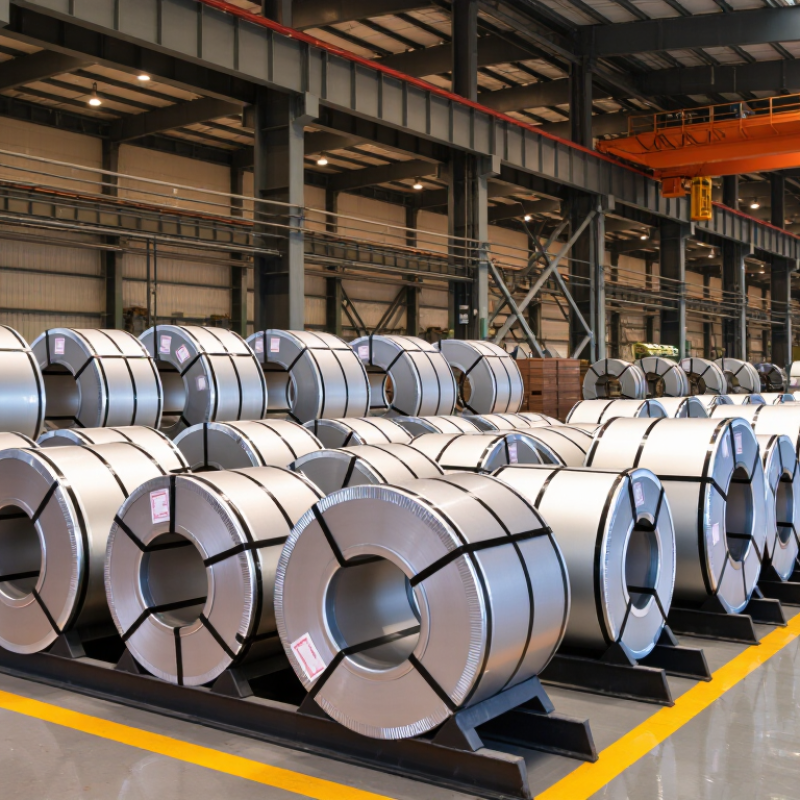
High carbon steel coil is flat steel with a relatively high carbon content, commonly above 0.60%, although definitions vary by standard and mill. More carbon increases hardness and wear resistance after heat treatment. It can also reduce ductility and make forming less forgiving. That trade-off matters.
The World Steel Association reported about 1.89 billion tonnes of crude steel production worldwide in 2023. However, high carbon coil represents only a specialized share of this output. It is commonly processed into saw blades, agricultural knives, spring components, suspension parts, scrapers, and wear-resistant panels. A thin coil may arrive with a clean surface and tight thickness tolerance. A heavier grade may show mill scale before further treatment.
When comparing global suppliers, buyers should examine carbon and manganese ranges, hardness data, coil weight, edge condition, flatness, and heat-treatment response. Mill test certificates and traceability are essential. ASTM, EN, and JIS designations are not always interchangeable. The ISO 4948 classification approach also shows why chemical limits must be checked carefully, not guessed from a product name. Some supplier descriptions remain vague. That is a weakness worth questioning. A practical trial coil can reveal forming cracks, inconsistent hardness, or surface defects that paperwork misses.
High carbon steel coil suppliers are evaluated through measurable consistency, not catalog claims. Buyers check carbon content, tensile strength, hardness, surface condition, and dimensional tolerances. A reliable supplier provides heat-level traceability and test certificates for every coil. Samples should be tested independently when the application is critical. Small chemistry differences can affect stamping, spring performance, and cracking risk.
Market scale also matters. The World Steel Association reported global crude steel production of about 1.89 billion tonnes in 2023. This large market does not guarantee equal quality. Supplier reviews should examine rolling equipment, annealing controls, coil weight accuracy, and delivery performance. Production capacity is useful, but repeatability matters more. Ask for recent inspection records, not only historical brochures. No score is flawless.
Environmental performance is now part of technical evaluation. The International Energy Agency estimates that steel production creates around 7% to 9% of global energy-related carbon dioxide emissions. Buyers can request product carbon-footprint data, energy sources, and recycled-content evidence. The OECD’s steel outlooks also highlight persistent global capacity pressures, making financial stability and realistic lead times important. A lower quotation may hide inconsistent gauge control or weaker service support. That risk is easy to underestimate. Evaluation should combine laboratory results, factory audits, customer references, and several completed shipments. Even then, supplier rankings need regular review because raw materials, equipment, and operating teams change.
Major Regional Markets for High Carbon Steel Coil Production
High carbon steel coil production is concentrated in East Asia, Europe, North America, and South Asia. Each region serves different industrial needs.
East Asia remains a major source for spring steel, saw blades, cutting tools, and stamped components. Large mills often provide tight thickness control and several surface finishes. South Asia is expanding its capacity, supported by rising automotive, construction, and machinery demand. Buyers should examine consistency between trial coils and later shipments. Small differences matter.
European producers generally emphasize traceability, energy efficiency, and demanding quality documentation. Their coils often suit precision engineering and safety-related components. North American suppliers benefit from strong links with appliance, transport, and industrial manufacturers. Regional delivery can reduce port delays and simplify technical communication. However, domestic availability may vary by grade and order volume.
The Middle East and Southeast Asia are also becoming important distribution and processing centers. Some facilities focus on slitting, annealing, or regional stockholding rather than primary steelmaking. This distinction deserves attention. A supplier may offer fast delivery without producing the coil itself. Buyers should verify melt origin, carbon range, hardness, coil weight, and inspection records. Comparing only price can hide higher processing or rejection costs. Regional comparisons are rarely neat. Shipping routes, tariffs, certification, and production schedules can change the final value. A careful audit remains necessary, even when the paperwork looks complete.
Asia represents the world’s largest steelmaking base, followed by Europe and North America. The regional figures show total crude steel production in 2023 and provide a practical indicator of the industrial capacity supporting high carbon steel coil production. High carbon coil output is a specialized subset of total crude steel production.
Source: World Steel Association, World Steel in Figures 2024. Values are shown in million tonnes.
High carbon steel coil suppliers worldwide usually fall into three groups: integrated steel mills, specialist processors, and regional service centers. Integrated mills control melting, casting, hot rolling, and heat treatment. This can improve chemistry consistency and batch traceability. Specialist processors often provide cold rolling, spheroidize annealing, slitting, edge conditioning, and custom coil weights. Service centers may offer faster delivery and smaller quantities, but their processing capabilities vary widely.
Manufacturing capability matters more than a polished catalog. Ask for carbon content ranges, hardness data, tensile results, surface standards, and inspection records. A qualified supplier should explain its furnace controls, rolling tolerances, and sampling methods clearly. It should also identify each coil by heat number and provide documentation that matches the shipment. Some suppliers look impressive online. Their technical response may still be vague.
Tips:
Compare sample inspection reports, not only prices. Request a trial coil before long-term purchasing. Check whether packaging protects edges during ocean transport. Confirm the supplier can maintain stable hardness after annealing. Also, examine their handling of complaints; slow or defensive replies may signal weak quality control. One overlooked detail is slit-edge quality. Burrs can damage dies and increase production waste. Requirements should be written precisely, because “standard quality” means different things across markets.
Choosing top high carbon steel coil suppliers requires a landed-cost comparison, not a factory-price contest. The World Steel Association reported roughly 1.88 billion tonnes of crude steel production worldwide in 2024. That scale increases choice, but it also makes traceability more important. Request the heat number, chemical analysis, mechanical results, coil weight, tolerance, and surface-condition records. For carbon grades, compare carbon, manganese, sulfur, and phosphorus limits against the agreed ASTM or EN specification. An ISO 9001 certificate supports process control, while independent inspection verifies the actual shipment. ISO 14001 can strengthen environmental credibility, but it does not prove coil quality.
Pricing needs a common basis: grade, thickness, width, treatment, quantity, currency, payment, and Incoterm. Ask whether the offer includes slitting, export packing, inland freight, ocean freight, insurance, and destination charges. The OECD Steel Outlook 2024 highlights continuing overcapacity and trade exposure across steel markets. An unusually cheap offer deserves questions about origin, consistency, and future price adjustments. Delivery comparisons should show production days, booking time, port, transshipment risk, and allowed shipment variation. A supplier promising seven days may mean seven days after production, not after purchase order. A spreadsheet can hide that distinction. No scorecard is perfect. Check recent mill certificates, inspection photos, reference shipments, and written claims procedures before committing.
Practical comparison framework using recognized standards, typical commercial ranges, and supplier-category benchmarks. All prices and lead times are indicative and should be confirmed in a written quotation.
| Supplier Category | Typical Product Scope | Quality and Technical Checks | Common Certifications and Standards | Indicative Price Position (USD per metric tonne) | Typical Delivery Terms | Best Fit |
|---|---|---|---|---|---|---|
| Large integrated steel mill | High-carbon hot-rolled or cold-rolled coil; broad width and thickness range; mill-edge or slit-edge options. | Heat and coil traceability; chemical analysis; tensile strength and hardness; surface inspection; dimensional and flatness control. | ISO 9001 quality management is common; EN 10089 for hot-rolled spring steels; EN 10132 for cold-rolled narrow strip; ASTM A684 where applicable. | Approx. 850–1,400 Usually more competitive for full-container or full-mill-order volumes. | Production lead time commonly 6–12 weeks; ocean transit often adds 2–8 weeks depending on route and port. | Large, recurring programs requiring stable chemistry and traceability. |
| Specialist spring-steel producer | High-carbon strip and coil for springs, saws, blades, clips, washers, and wear-resistant components. | Tighter control of carbon and manganese; spheroidized or annealed condition when specified; hardness uniformity; edge quality; decarburization and inclusions testing. | ISO 9001 is common; ISO 14001 may be available; EN 10089, JIS G4801, ASTM A684, or customer-specific specifications. | Approx. 1,050–1,900 Higher pricing may reflect tighter tolerances, heat treatment, or surface requirements. | Standard sizes commonly 5–10 weeks; custom grades or special annealing may require 8–14 weeks. | Precision applications where fatigue performance, hardness, and consistency are critical. |
| Cold-rolling and slitting service center | Commercially available high-carbon coils converted into slit coils, narrow strip, or customer-specific widths. | Verify original mill test certificate; slit-width tolerance; burr height; coil ID and OD; camber, flatness, and weld policy. | ISO 9001 may be held by the processor; material compliance depends on the original mill; inspection reports should identify heat and coil numbers. | Approx. 1,100–2,100 Processing, slitting, packaging, and lower order quantities can increase the delivered price. | Stock items may ship in 1–3 weeks; conversion orders commonly require 3–8 weeks. | Smaller lots, multiple widths, rapid replenishment, and customized packaging. |
| Regional export stockist | Mixed inventory of high-carbon hot-rolled and cold-rolled coils sourced from several producing regions. | Confirm actual country of origin; review mill test certificate and packing list; check storage condition, rust, coil telescoping, and age of stock. | Product may be supplied to ASTM, EN, JIS, or GB specifications; certification must be matched to the actual heat and coil rather than the trading company alone. | Approx. 1,150–2,200 May be economical for spot purchases but less predictable for repeat specifications. | Ex-stock dispatch may be 3–15 business days; replenishment orders may take 6–12 weeks. | Urgent requirements, trial orders, and buyers needing flexible quantities. |
| Value-focused overseas producer | Standard high-carbon grades in larger production batches, generally supplied as mill-finish coil. | Require independent pre-shipment inspection for critical orders; confirm chemical limits, mechanical properties, coil weight, surface condition, and packing standard. | ISO 9001 may be available; compliance with ASTM, EN, JIS, or GB requirements should be stated on the purchase order and certificate. | Approx. 750–1,250 Lower base prices can be offset by freight, duties, inspection, finance, and inventory costs. | Production commonly 5–10 weeks; total door-to-door timing may be 8–18 weeks after order confirmation. | Cost-sensitive applications with sufficient planning time and controlled incoming inspection. |
| Premium narrow-strip manufacturer | Cold-rolled high-carbon strip with narrow widths, tight gauges, controlled edges, and optional heat treatment. | Gauge and width capability; hardness profile across strip width; surface roughness; edge condition; decarburization depth; coil set and residual stress. | ISO 9001 is common; sector-specific customer approvals may apply; technical delivery conditions should define testing frequency and acceptance limits. | Approx. 1,500–3,000+ Premiums are common for narrow widths, very tight tolerances, and certified heat treatment. | Standard products may require 6–12 weeks; qualification and first-article approval can extend the schedule. | Automotive, industrial spring, cutting, safety, and precision-component applications. |
Key comparison points: Request the exact grade, carbon range, delivery condition, thickness and width tolerances, surface requirements, coil weight, inner diameter, packaging method, inspection documents, Incoterm, payment terms, and claims procedure before comparing offers.
Certification note: ISO 9001 confirms a quality-management system; it does not by itself prove that a particular coil meets a material standard. The mill test certificate should identify the grade, heat number, chemical composition, mechanical results, dimensions, and applicable standard.
Pricing note: The ranges above are broad planning benchmarks for high-carbon steel coil and strip. Actual prices vary with grade, thickness, width, quantity, surface condition, heat treatment, origin, freight, tariffs, currency, and delivery basis.

