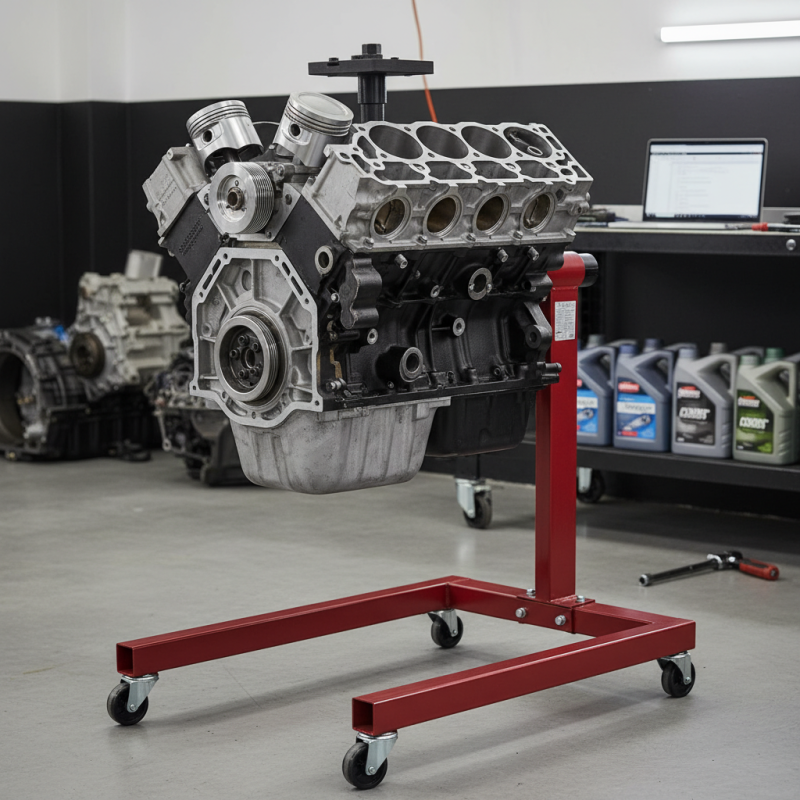
How to Choose the Right Car Engine Stand for Your Needs?
Choosing the right car engine stand is essential for anyone working on automotive projects. A suitable stand provides the stability and support needed for safe and efficient engine work. It can prevent accidents and ensure that everything runs smoothly.
When selecting a car engine stand, consider your specific needs. Engine size and weight are crucial factors. Not all stands can support heavier engines. Some buyers overlook this detail, which can lead to mishaps.
The design of the stand is equally important. A well-constructed stand should be sturdy and easy to maneuver. Look for features that enhance usability, like adjustable heights or swivel capabilities. Remember, investing in the right car engine stand can save you time and frustration in the long run.
Understanding the Purpose of a Car Engine Stand
A car engine stand serves a vital function for automotive enthusiasts and professionals alike. It provides the support needed to safely hold an engine while you work on it. This is especially crucial during repairs or upgrades. An engine stand allows for easy access to all areas of the engine. You can rotate and position the engine without straining yourself.
Choosing the right engine stand is essential. Consider the weight of the engine you plan to work with. Stands come in various weight capacities. You should also think about mobility. Some stands are fixed, while others have wheels. This feature can simplify moving an engine around your workspace.
Not everyone realizes that engine stands can vary in height and stability. This can affect your comfort while working. If the stand is too low, you might find it awkward. Too high, and it can pose a safety risk. Evaluate your workspace and choose a stand that suits you. Remember, it’s about finding the right balance between functionality and safety.
Key Factors to Consider When Choosing an Engine Stand
Choosing the right car engine stand is crucial for effective engine work. When considering an engine stand, think about the weight capacity. Some stands can only handle lightweight engines. Ensure yours matches the engine size and weight you plan to work on. A stand that’s too weak can lead to hazards.
Next, focus on mobility and adjustability. Some engine stands have wheels, making it easier to move around. Others may have fixed bases that limit movement. Adjustability in height can also be beneficial. Working at a comfortable height reduces strain. Consider how often you will move or adjust the stand.
Lastly, think about stability. A wider base often provides better support. Some stands might have lower quality materials. Investing in a sturdy design is wise. Be honest with your needs; overspending doesn’t guarantee better functionality. Evaluate what features are essential for your tasks.
Types of Engine Stands: Fixed, Adjustable, and Portable Options
When selecting an engine stand, understanding the types is crucial. Fixed engine stands are sturdy and designed for stationary use. They offer excellent stability and can support heavy engines, typically up to 2,500 pounds. However, they lack flexibility and require ample space. This can be a limitation for smaller workshops.
Adjustable engine stands give added versatility. You can change the height and orientation to suit your working needs. This feature enhances comfort and efficiency. According to industry reports, adjustable stands can accommodate most engine sizes, making them a popular choice. Yet, they may not be as stable as fixed stands under certain circumstances.
Portable engine stands provide unmatched mobility. They are lighter and easy to transport. Many DIY enthusiasts prefer these for home projects. However, they often have lower weight capacities, usually around 1,000 pounds. This means they may not be suitable for larger engines. Rethinking your workspace can help you decide which option fits best.
Assessing Load Capacity: Ensuring Stability and Safety
When choosing a car engine stand, load capacity is crucial. A stand needs to support the weight of the engine securely. Most engine stands can handle up to 1,500 pounds, but it’s wise to verify weight limits. An engine that exceeds this limit could tip the stand over. This poses a risk to both safety and equipment.
Stability is another factor to consider. Look for an engine stand with a wide base. This design can help prevent accidental tipping. Often, users overlook the importance of sturdy wheels for ease of movement. If the stand moves too easily, an engine could fall. Inspect the welds and materials, too—they should be robust and reliable.
It’s a common mistake to underestimate the need for a secure mounting system. Ensure that the engine is properly clamped. A loose engine can shift and cause injury. Regularly check the stand for wear and tear. Maintenance is essential for safety. If a stand shows signs of rust or weakness, don't hesitate to replace it.
How to Choose the Right Car Engine Stand for Your Needs? - Assessing Load Capacity: Ensuring Stability and Safety
| Load Capacity (lbs) | Stand Weight (lbs) | Material | Wheel Type | Adjustable Height |
| 1,000 | 50 | Steel | Swivel | Yes |
| 1,500 | 60 | Aluminum | Fixed | No |
| 2,000 | 70 | Steel | Swivel | Yes |
| 2,500 | 75 | Steel | Fixed | Yes |
| 3,000 | 90 | High-Strength Steel | Swivel | Yes |
Budgeting for Your Engine Stand: Balancing Cost and Quality
When budgeting for an engine stand, cost and quality must be balanced. A good engine stand typically ranges from $100 to $500. However, many people underestimate the potential costs. A cheap stand may save money upfront but could risk damaging the engine. According to industry reports, using a low-quality stand can lead to upwards of $800 in repair costs. This creates an illusion of savings that may hurt in the long run.
Understanding the type of engine stand needed is crucial. For lighter engines, a basic model may suffice. But for heavier loads, a more robust stand is essential. The weight rating of the stand is often overlooked. A well-rated stand, such as those with a 1,000-pound capacity, can provide peace of mind. Remember, safety should not be compromised for a lower price.
While it’s tempting to go for the lowest price, this decision could lead to more problems. A proper evaluation of your needs and the quality of the equipment will yield better results. It’s about investing wisely, not just spending lightly.
Budgeting for Your Engine Stand: Balancing Cost and Quality