

Choosing the right Benches for global sourcing requires more than comparing prices on a supplier website. Buyers must examine design, materials, manufacturing capability, compliance, and long-term performance. A bench may look attractive in a product photo, yet feel unstable in a showroom or arrive with damaged corners. Practical evaluation matters.
Start with the intended setting. Indoor seating may require solid wood, powder-coated steel, or upholstered surfaces. Outdoor Benches need resistance to moisture, ultraviolet exposure, rust, and temperature changes. Ask suppliers for material specifications, test reports, factory photographs, and production samples. A sample reveals details that digital images often hide, including uneven welds, rough edges, weak joints, and inconsistent finishes.
Supplier reliability also deserves close attention. Review factory experience, quality-control procedures, production capacity, packaging methods, and communication speed. Independent inspections can confirm dimensions, load ratings, surface quality, and carton protection before shipment. Freight costs, duties, lead times, and minimum order quantities should be included in the landed-cost calculation. A low unit price can become expensive after delays or replacements.
Do not trust promises alone.
Responsible sourcing also considers worker safety, environmental practices, and traceable materials. Requirements differ across countries, so buyers should verify applicable standards with qualified local professionals. I have seen sourcing decisions improve when teams test prototypes under realistic use, rather than relying on spreadsheets. Still, no evaluation is perfect. Supplier conditions can change, and even a careful forecast may miss seasonal demand. A strong sourcing process therefore combines evidence, field experience, and regular review.
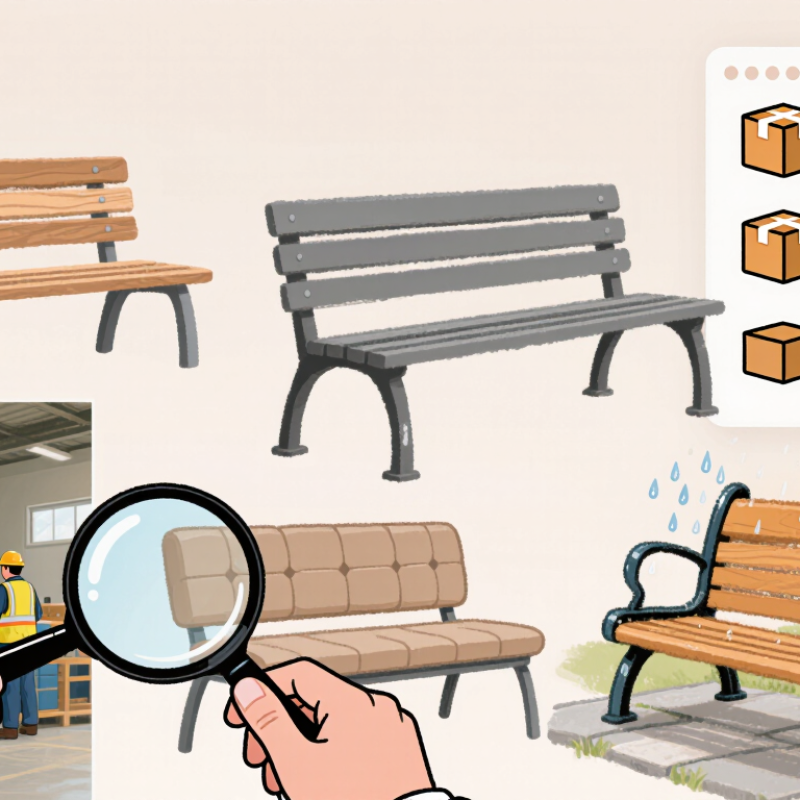
Define the bench’s intended use before comparing suppliers or prices. A locker-room bench needs moisture resistance, rounded edges, and stable footing. A garden bench requires weather-resistant materials and drainage-friendly construction. For warehouses, check load capacity, impact resistance, and clearance for cleaning equipment. Write these requirements in measurable terms, such as a 1,000-kilogram distributed load or a 450-millimeter seat height.
Buyer needs should guide comfort and appearance. Public-space buyers may prefer vandal-resistant surfaces and concealed fasteners. Schools often need smooth edges, easy cleaning, and strong anchoring options. Retail customers may value lighter weight, flat-pack shipping, and simple assembly. Ask how the bench will be moved, installed, cleaned, and repaired. Small details matter.
Do not rely on catalog photos alone. Request drawings, material specifications, test records, and a production sample. Check welds, surface consistency, hardware quality, and packaging protection. A sample can look excellent while revealing weak joints during assembly. That happened in one evaluation, and the specification had missed fastener access. A perfect requirement list is rarely possible. Leave room for review after testing. Confirm tolerances, replacement parts, inspection steps, and export packaging before placing a larger order. Temperature changes, humidity, and long transit times can expose weaknesses that local testing misses.
When choosing benches for global sourcing, compare materials before comparing prices. Hardwood offers warmth, strength, and easy refinishing. However, moisture can cause swelling, cracks, or fungal damage. Powder-coated steel handles heavy use well and suits modern public spaces. Its weak point is hidden corrosion after surface damage. Recycled plastic resists rain, insects, and salt air. It can feel less refined, and heat may build under direct sunlight. Concrete lasts for decades, but shipping and installation require serious planning.
Construction details often decide durability. Mortise-and-tenon joints usually outperform simple screws in timber frames. Welded steel frames need continuous, clean welds without visible pinholes. For outdoor benches, drainage holes prevent water from collecting inside tubes. Stainless fasteners help, but they do not solve poor design. Check seat thickness, frame load ratings, edge finishing, and replaceable components. A replaceable slat can reduce long-term maintenance costs.
Test samples in realistic conditions. Place them on uneven ground, expose finishes to moisture, and inspect movement after repeated loading. Ask suppliers for material grades, coating thickness, test methods, and maintenance schedules. Documents matter, but physical inspection matters more. I once trusted a thick-looking frame that failed at its joint. It looked reliable. That mistake still influences my checks. No material wins every climate. Salt air, freezing cycles, ultraviolet light, and careless assembly can change the result. A reliable sourcing decision weighs local conditions, repair access, packing protection, and the bench’s expected daily use.
| Bench Material | Typical Construction Method | Approx. Weight for 1.5 m Bench | Typical Static Load Capacity | Outdoor Suitability | Expected Service Life* | Maintenance Requirement | Durability Rating | Relative Cost Index | Best-Suited Applications |
|---|---|---|---|---|---|---|---|---|---|
| Powder-Coated Mild Steel | Welded steel frame with punched or formed components; polyester powder coating applied after surface preparation. | 35–55 kg | 300–500 kg | Good in normal outdoor conditions; edge damage and salt exposure can lead to corrosion if not treated. | 10–15 years | Inspect coating, welds, and fasteners annually; repair exposed steel promptly. | ★★★★☆ | Medium | Public seating, transit areas, schools, parks, and commercial courtyards. |
| Hot-Dip Galvanized Steel | Welded steel structure immersed in molten zinc, commonly followed by a compatible paint or powder finish. | 40–60 kg | 300–500 kg | Very good, including humid environments; particularly suitable where corrosion protection is important. | 15–25 years | Check drainage, joints, and scratches; avoid incompatible coatings that can cause adhesion problems. | ★★★★★ | Medium–High | Coastal locations, infrastructure projects, parks, campuses, and heavy-use public spaces. |
| Aluminum | Extruded or cast aluminum components joined with stainless-steel fasteners; often anodized or powder coated. | 20–35 kg | 250–400 kg | Excellent corrosion resistance and easy handling; avoid direct contact with incompatible metals in wet conditions. | 15–25 years | Wash periodically; inspect fasteners and coating for galvanic corrosion or impact damage. | ★★★★★ | High | Coastal projects, rooftop terraces, hospitality areas, and installations requiring low weight. |
| Stainless Steel | Welded or bolted stainless-steel frame, usually with brushed, polished, or passivated surfaces. | 35–55 kg | 300–500 kg | Excellent when the correct grade and finish are selected; stronger corrosion resistance is needed for marine exposure. | 20–30 years | Clean regularly to remove salt and pollutants; prevent contamination from carbon-steel tools or particles. | ★★★★★ | High | Premium public areas, marine environments, airports, healthcare facilities, and high-traffic interiors. |
| Treated Hardwood | Mortise-and-tenon, dowelled, or bolted timber construction; finished with exterior oil, stain, or protective coating. | 35–60 kg | 250–400 kg | Good when sustainably sourced and properly sealed; moisture cycling can cause cracking, swelling, or checking. | 8–15 years | Reseal or oil every 1–3 years depending on climate; keep end grain and joints protected. | ★★★☆☆ | Medium–High | Gardens, hospitality venues, residential developments, and projects requiring a natural appearance. |
| Thermally Modified Timber | Heat-treated timber boards mounted to a steel or aluminum subframe with concealed or exposed fasteners. | 30–50 kg | 250–400 kg | Very good dimensional stability and improved moisture resistance compared with untreated timber. | 12–20 years | Clean periodically; apply UV-protective finish if color retention is required. | ★★★★☆ | Medium–High | Landscape projects, eco-focused developments, courtyards, and contemporary outdoor spaces. |
| Recycled Plastic Lumber | Extruded or molded solid profiles attached to a galvanized or stainless-steel frame. | 45–75 kg | 250–400 kg | Excellent resistance to rot, insects, and moisture; thermal expansion must be allowed for in the design. | 15–25 years | Clean with mild detergent; inspect for UV fading, deformation, and loose fasteners. | ★★★★☆ | Medium | Parks, waterfronts, schools, playground surroundings, and low-maintenance public projects. |
| Precast Concrete | Steel-reinforced or fiber-reinforced concrete cast in molds; may include timber, metal, or composite seat inserts. | 120–250 kg | 500 kg or more | Excellent structural stability and weather resistance; freeze-thaw performance depends on mix design and drainage. | 25–40 years | Inspect for cracks, spalling, staining, and standing water; repair damaged surfaces to limit water ingress. | ★★★★★ | Medium–High | Permanent civic projects, plazas, transit stations, campuses, and high-vandalism locations. |
| Stone or Granite | Solid stone slabs or blocks mechanically fixed to a concealed or exposed structural frame. | 150–300 kg | 500 kg or more | Excellent resistance to weather, impact, and UV exposure when properly supported and drained. | 30–50 years | Clean surfaces as needed; inspect anchors, joints, and support points for movement or water penetration. | ★★★★★ | High | Monuments, premium landscapes, civic plazas, memorials, and permanent architectural installations. |
| Note: Weight, load capacity, service life, and cost are indicative industry ranges for commercial benches approximately 1.5 m long. Actual performance depends on profile dimensions, fastener grade, anchoring, coating system, climate, user loading, installation quality, and maintenance. For global sourcing, request material certificates, coating specifications, load-test documentation, corrosion-test results, packaging details, and compliance documentation before approval. | |||||||||
How to Choose the Best Benches for Global Sourcing
A dependable bench supplier should prove more than attractive catalog photographs. Request recent factory records, production samples, and clear material specifications. Check whether the supplier manufactures frames, seats, finishes, or only assembles imported parts. This distinction affects quality control and lead times.
Certifications deserve careful verification. Ask for the certificate number, issuing organization, covered facility, and expiration date. Confirm that the certificate applies to the actual product and manufacturing site. ISO 9001 can indicate a structured quality system, but it does not guarantee excellent benches. Review load-test reports, welding inspections, coating tests, and timber documentation when relevant. Supplier audits should examine worker training, equipment maintenance, traceability, and corrective actions.
Tips: Compare three suppliers using the same technical brief. Request a pre-production sample before approving volume production. Measure seat height, frame alignment, surface smoothness, and packaging strength. Ask for monthly capacity, minimum order quantities, tooling ownership, and peak-season lead times. Keep written records of every change.
Practical experience has taught me that a polished audit file can hide weak factory control. A supplier may outsource finishing without explaining it clearly. That is a warning. Visit the facility when possible, or use an independent inspection service. Still, inspections are only snapshots. Repeat checks during production. No checklist is perfect. Leave room for questions, especially when delivery promises seem unusually fast. Reliable sourcing combines documents, direct observations, testing, and honest communication.
A practical supplier evaluation framework for comparing certifications, quality systems, manufacturing capability, compliance, and delivery performance.
The weighting reflects a practical global-sourcing scorecard: product quality and manufacturing capability receive the highest priority, while certifications, compliance, and delivery reliability support risk control. Buyers should verify all certificates, audit reports, testing records, production capacity, and lead-time commitments before placing an order.
Price is only the first measurement when sourcing benches internationally. Compare the full landed cost, including production, packaging, inspection, freight, insurance, duties, and inland delivery. Ask suppliers for itemized quotations. A low unit price can hide weak packaging or expensive port handling. My first quote comparison was too simple. I ignored pallet space, and the final cost increased sharply.
Shipping details need practical checking. Confirm bench dimensions, carton measurements, gross weight, and loading quantity. A bench that fits one container plan may waste space in another. Request the shipping port, estimated transit time, and applicable Incoterm in writing. Test the freight calculation with a real delivery address. Delays happen. Build reasonable time into your purchasing schedule.
Quality control should match the bench’s materials and use. Review wood moisture, welds, surface finish, load performance, and hardware alignment. Use an approved sample before mass production. A third-party inspection can check measurements, appearance, packaging, and quantity before shipment. Keep photographs and signed inspection records. Do not rely only on factory assurances. I have learned that a perfect sample can still hide inconsistent production.
Import requirements also deserve early attention. Check product classifications, labeling rules, packaging requirements, and required documents with customs professionals in the destination market. Confirm commercial invoices, packing lists, certificates, and transport documents are accurate. Requirements can differ by material, destination, and intended use. Leave room for correction when documents or specifications change.
Samples reveal more than catalog photographs. Request one finished bench before approving a large order. Check its length, seat height, weight, and usable load. Measure each point with a steel ruler and record the results. Small differences matter.
Inspect the frame underneath. Look for continuous welds, clean corners, and stable feet on a flat floor. Sit on the sample and shift your weight slowly. Listen for clicks or movement. Examine the surface under bright light for uneven coating, sharp edges, dents, or visible wood defects. Test the finish with a damp cloth and mild cleaner. It should resist ordinary handling without leaving color on the cloth. Ask the supplier for material specifications, production tolerances, care instructions, and test records. Documents should match the physical sample.
A sample can still hide production problems. I once approved a strong prototype, then found thinner tubing in the first batch. That mistake changed my verification process. Request a pre-shipment inspection with random units from different cartons. Compare dimensions, weld quality, hardware, color, and packaging against the approved sample. Photograph every checkpoint and keep signed records. Confirm that packaging protects corners during ocean transport. Inspect the first production batch personally or use an independent inspection service. Do not rely on one perfect sample. Suppliers should explain deviations before shipment, not after arrival. Some defects are easy to miss when schedules feel urgent. Take a pause. Reliability grows from repeated checks, clear specifications, and evidence that survives review.

