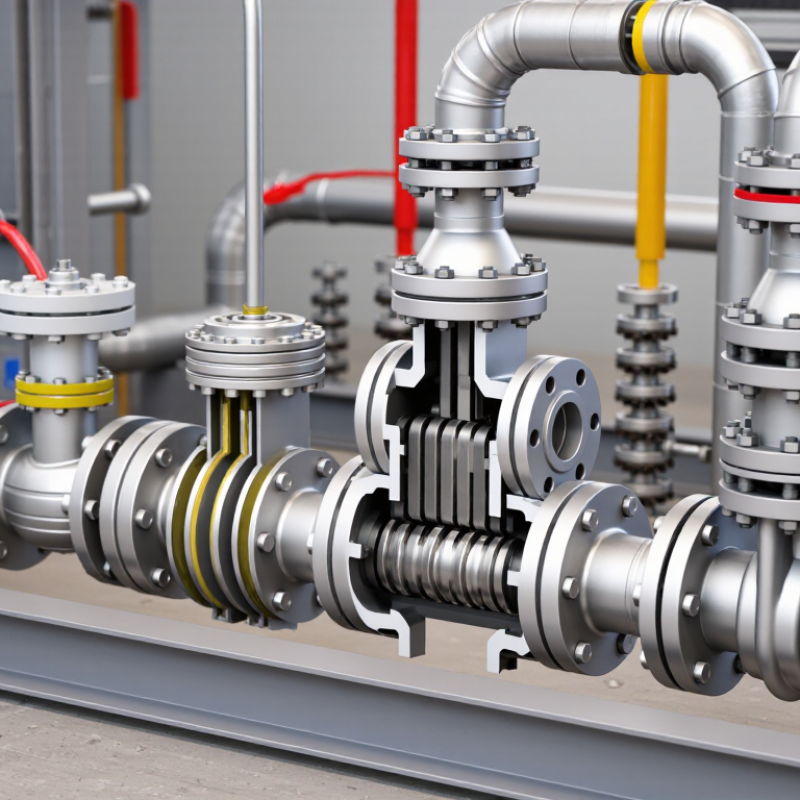
Choosing Bellows Valves for industrial applications begins with understanding the process, not the catalogue. Engineers should identify fluid composition, operating pressure, temperature range, flow demand, and cycling frequency. A valve facing hot corrosive gas needs different construction from one handling clean vacuum service. Small details matter. I have seen selection decisions change after checking a real piping drawing, rather than relying on a process summary. This is where experience supports sound engineering judgment. Welded bellows can provide strong containment for hazardous or ultra-pure media, while formed bellows may suit less demanding duties. However, design names alone do not prove performance. Review pressure ratings, allowable temperatures, materials, seat design, and end connections against verified manufacturer data. Ask how the valve behaves during repeated thermal movement.
Reliability also depends on the installation environment. Vibration, misalignment, external loads, and poor support can shorten bellows fatigue life. Check the expected stroke count and request cycle-life evidence for critical service. For vacuum systems, examine helium leak-test results and specified leak limits. For steam or aggressive chemicals, confirm material compatibility with documented corrosion guidance. A qualified supplier should explain test methods, traceability, cleaning controls, and maintenance needs without hiding assumptions. That conversation can reveal weak points. It is worth involving operations and maintenance staff, because they understand access problems and actual shutdown patterns. Selection should also consider actuator force, fail position, response time, and spare-part availability. The cheapest valve may create expensive downtime. Still, a premium specification is not automatically better. Overengineering can add weight, cost, and unnecessary complexity. Compare independent technical evidence, plant history, and applicable industry requirements before approval. Leave room for review. Conditions often change after commissioning, and a good choice remains understandable years later.
Bellows valves protect the process from atmosphere exposure around the stem. Their welded metal bellows create a secondary pressure boundary. This design suits toxic, corrosive, radioactive, and ultra-clean services. It also supports vacuum systems and high-temperature applications. The U.S. EPA’s Leak Detection and Repair Best Practices Guide identifies valves as roughly 60% of leaking components in process facilities. That figure explains their industrial role. A small stem leak can become a costly safety and maintenance problem.
Choose by pressure, temperature, media chemistry, cycling frequency, and required cleanliness. Confirm the bellows material, weld quality, rated stroke, and pressure class. Multi-ply bellows may improve fatigue resistance, but they can increase operating force. Ask for helium leak testing and documented results under ISO 15848-1 or equivalent requirements. API 624 testing can also support rising-stem valve performance evaluations. These standards improve confidence, though they do not replace application engineering. A perfect specification is rare.
Tips: Check the valve at actual operating temperature, not room temperature. Review thermal expansion and actuator thrust. For frequent cycling, calculate bellows fatigue life instead of relying on catalog averages. Keep a spare valve for critical lines. That sounds excessive. It may prevent a long shutdown. Inspect welded joints during maintenance, especially after vibration, thermal shocks, or repeated pressure changes. Finally, involve operators early. Their experience often reveals awkward access, hidden heat, or cycling conditions that drawings miss.
How to Choose Bellows Valves for Industrial Applications
Defining Process Conditions and Valve Selection Requirements
Bellows valve selection begins with the actual process, not the catalog. Record fluid composition, pressure, temperature, flow direction, and operating frequency. Include startup, shutdown, cleaning, and upset conditions. A valve exposed to 180°C steam may face a colder thermal shock during cleaning. That change matters.
Check whether the fluid is corrosive, toxic, oxidizing, abrasive, or sensitive to contamination. Material compatibility must cover the body, bellows, stem, seals, and internal surfaces. Consider vacuum service carefully. External leakage can become an internal contamination problem. In high-purity systems, dead spaces and surface finish deserve equal attention.
Define the required leakage class and isolation duty before choosing the design. A valve used for frequent cycling needs suitable bellows fatigue resistance. A rarely operated valve may need stronger attention to storage and seat sticking. I have seen specifications focus heavily on pressure rating while ignoring cycling data. That is an avoidable gap. Ask for tested cycle life, pressure-temperature limits, inspection records, and maintenance instructions. Do not accept vague claims.
Connection size should match the process, not simply the existing pipe. Oversizing can reduce control stability and increase cost. Undersizing can create pressure loss and erosion. Consider actuator force, installation space, orientation, access for testing, and failure position. Small details matter. A final review should compare the valve’s documented limits with real operating data, including the conditions operators usually overlook.
How to Choose Bellows Valves for Industrial Applications
Bellows material should match the process, temperature, and cycling frequency. Stainless steel bellows suit many clean steam and vacuum services. Nickel-based alloys perform better with chlorides, acids, and severe thermal cycling. However, “corrosion resistant” is not absolute. A material that survives the fluid may still fatigue after thousands of pressure cycles.
Design also changes reliability. Single-ply bellows offer flexibility and lower cost. Multi-ply bellows provide greater fatigue resistance and safer containment. Welded bellows usually suit high-purity systems because they reduce crevices. According to the U.S. Environmental Protection Agency’s Leak Detection and Repair Best Practices Guide, valves can represent about 60% of leaking components in process facilities. This supports careful bellows selection where emissions control matters. ISO 15848-1 provides a recognized framework for fugitive-emission testing and classification.
Pressure ratings require more than reading the pipeline’s normal pressure. Engineers should check the valve’s pressure-temperature rating under ASME B16.34, then include startup surges, vacuum conditions, and thermal shock. A valve rated for 1,000 psi at ambient temperature may have a lower rating at 400°C. The weakest point may be the bellows weld, not the body. In field reviews, cycle data is often incomplete. That is a problem. When uncertain, specify a documented cycle life, qualified welding procedure, and factory helium-leak test.
Sealing performance deserves more attention than purchase price. A metal bellows isolates the process fluid from the stem, reducing fugitive emissions during normal operation. The IEA’s Global Methane Tracker 2024 estimates that 40% of fossil-fuel methane emissions could be avoided at no net cost. This strengthens the case for tested low-emission valve designs. Specify ISO 15848-1 qualification where emission classification matters. Ask for test temperature, pressure, cycle count, and leakage results. A generic “zero leakage” claim is not enough.
Compliance also depends on service conditions. The U.S. EPA’s equipment-leak protocol identifies valves as roughly 60% of leaking components in process facilities. That figure makes inspection history important. Review pressure ratings, material compatibility, fire-safety requirements, and local emissions rules.
Bellows construction must match thermal cycling and corrosive media. Thin bellows can respond quickly, but repeated movement may shorten fatigue life.
Maintenance planning should be practical. Provide a visible stroke indicator, protected bellows, and an accessible bonnet area. Record cycle counts and any unusual operating noise. Keep spare gaskets and documented torque values onsite. Maintenance teams sometimes replace a complete valve when only a seal requires attention, increasing downtime and waste. However, repairing a damaged bellows is rarely sensible. I would also challenge one common assumption: “maintenance-free” does not mean inspection-free. Even a clean valve can hide fatigue beneath insulation.
Choosing a bellows valve starts with the process, not the catalogue. Match the valve to the fluid, pressure, temperature, cycling rate, and required cleanliness. A high-temperature steam line may need welded bellows and alloy construction. A pharmaceutical line may need polished internal surfaces and drainable geometry. These details affect service life more than a larger pressure rating alone.
Leak prevention deserves serious attention. The International Energy Agency’s Global Methane Tracker 2024 estimated that fossil-fuel operations released about 120 million tonnes of methane in 2023. Bellows-sealed designs can reduce stem leakage where toxic, volatile, or ultra-clean media are present. For qualification, review ISO 15848-1 test classes, then compare test temperature, cycle count, and pressure with real plant conditions. A valve passing a laboratory test may still fail in abrasive slurry. I would not treat “zero maintenance” as a credible specification. Thermal cycling, deposits, and poor installation still matter.
Tips: Build a duty matrix before selecting the valve. Record media composition, minimum and maximum temperature, pressure, flow direction, and annual cycles. Check whether the bellows material matches corrosion risks. Specify welded connections for severe leakage-control needs. Request traceable test records, not only a certificate. Leave room for inspection. The first choice is often imperfect, especially when operating data is incomplete. A short field trial can reveal vibration, slow response, or unexpected deposits before full installation.
| Industrial Application | Typical Process Conditions | Primary Leakage-Control Requirement | Recommended Valve Configuration | Key Material and Design Features | Actuation and Control | Important Selection Checks | Priority of Bellows Sealing |
|---|---|---|---|---|---|---|---|
| Toxic or hazardous gas handling | Gases that may be toxic, corrosive, flammable, or harmful if released; pressure and temperature vary by process. | Prevent fugitive emissions through the stem or spindle area. | Sealed-bonnet bellows valve with a secondary packing arrangement where required by the applicable specification. | Welded metal bellows, corrosion-compatible body and trim, low-emission stem design, and robust bonnet construction. | Manual handwheel for isolation; pneumatic or electric actuation for remote or automated service. | Confirm gas compatibility, emission standard, pressure class, bellows cycle life, bonnet containment, and emergency isolation requirements. | Very High |
| Vacuum service | Vacuum systems where air ingress can reduce product quality, affect process stability, or compromise equipment performance. | Minimize inward leakage and maintain a reliable barrier around the moving stem. | Vacuum-rated bellows valve with a compact flow path and suitable internal surface finish. | Low-outgassing materials, clean internal surfaces, welded bellows, and minimized dead volume where cleanliness is important. | Manual or pneumatic actuation, depending on cycle frequency and system automation. | Check minimum absolute pressure, leak-rate specification, virtual leaks, outgassing, particle generation, and orientation limits. | Very High |
| Ultra-high-purity gas distribution | High-purity or specialty gases used in semiconductor, analytical, laboratory, and advanced manufacturing processes. | Prevent atmospheric contamination and avoid introducing particles or moisture into the gas stream. | All-metal bellows valve with butt-weld, face-seal, or other hygienic/clean connection selected for the system. | Electropolished or precision-finished wetted surfaces, low-particle construction, orbital-weld compatibility, and cleanroom-controlled assembly where specified. | Pneumatic actuation is common in automated gas panels; manual actuation may be used for local isolation. | Verify surface finish, helium leak rate, internal volume, cleaning protocol, gas compatibility, and connection standard. | Very High |
| High-temperature steam and thermal-fluid systems | Hot steam, hot water, or heat-transfer fluids with elevated temperature and repeated thermal cycles. | Maintain stem sealing under thermal expansion, contraction, and pressure cycling. | High-temperature bellows globe or isolation valve, selected with suitable end connections and pressure-temperature rating. | Temperature-rated bellows alloy, body material suitable for the fluid, thermal-expansion allowance, and protected actuator components. | Handwheel for local isolation; pneumatic actuation for frequent cycling or control integration. | Check pressure-temperature curves, thermal cycling capability, insulation effects, condensate management, flow direction, and water-hammer risk. | High |
| Chemical processing | Acids, alkalis, solvents, oxidizers, and reactive process fluids at moderate or elevated pressure and temperature. | Control external emissions while protecting the stem mechanism from the process medium. | Bellows-sealed globe or needle valve selected for the required shutoff or throttling duty. | Corrosion-resistant bellows and trim, suitable body lining or alloy, compatible gasket materials, and guarded bonnet design. | Manual operation for infrequent isolation; pneumatic control for repeatable throttling or automated sequencing. | Review chemical compatibility for all wetted and non-wetted materials, concentration, temperature, pressure, crystallization, and cleaning chemicals. | High |
| Pharmaceutical and biotechnology processing | Clean liquids, gases, steam, or process fluids subject to strict hygiene and contamination-control requirements. | Prevent product contamination and eliminate crevices that can retain residue or support microbial growth. | Sanitary bellows valve with drainable geometry and process connections compatible with hygienic piping. | Polished wetted surfaces, crevice-minimized construction, drainability, cleanable materials, and elastomers compatible with the validated process. | Pneumatic actuation is preferred for automated clean-in-place and sterilize-in-place sequences; position feedback may be required. | Confirm surface finish, cleanability, sterilization temperature, drain orientation, validation requirements, and applicable hygienic design criteria. | High |
| Cryogenic liquids and gases | Very low-temperature fluids such as liquefied industrial gases, with significant temperature changes during startup and shutdown. | Maintain external tightness and reliable operation despite contraction, embrittlement risks, and thermal cycling. | Cryogenic bellows valve with an extended bonnet or equivalent cold-service design. | Low-temperature-rated body and trim, suitable bellows alloy, extended bonnet for insulation and actuator protection, and compatible seat materials. | Manual actuation for local isolation; pneumatic actuation where remote operation is necessary. | Verify minimum design temperature, oxygen compatibility where applicable, insulation clearance, seat behavior, thermal contraction, and pressure-relief provisions. | High |
| Nuclear and radiation-related systems | Systems requiring high reliability, controlled leakage, qualification documentation, and resistance to demanding environmental conditions. | Provide dependable stem sealing and predictable performance over the specified service life. | Qualified bellows-sealed isolation or control valve designed for the system’s safety classification and environmental conditions. | Documented materials traceability, qualified bellows construction, radiation-compatible materials where required, and conservative mechanical design. | Actuation depends on the safety function, available utilities, fail position, and required surveillance or testing method. | Confirm design-basis events, seismic qualification, aging management, testing requirements, leakage limits, documentation, and maintenance access. | Very High |
| Oil and gas refining | Hydrocarbons, hydrogen, sulfur compounds, steam, and other refinery fluids across a wide range of temperatures and pressures. | Reduce fugitive emissions and improve personnel and environmental protection around frequently operated valves. | Low-emission bellows-sealed globe or isolation valve, selected for the process pressure class and fire-safety requirements. | Fire-safe construction where required, materials suitable for sour or hydrogen service, robust bellows, and anti-static or conductive features when specified. | Manual, pneumatic, hydraulic, or electric actuation based on valve size, access, and safety-instrumented requirements. | Check fugitive-emission qualification, sour-service requirements, fire testing, hydrogen compatibility, erosive service, and maintenance procedures. | High |
| Power generation and boiler auxiliaries | Boiler feedwater, steam, condensate, chemical dosing, and utility systems with frequent thermal and pressure changes. | Limit external leakage and protect operators from hot or hazardous fluids. | Bellows-sealed globe valve for isolation or moderate control duties, with pressure-temperature rating matched to the circuit. | High-temperature materials, erosion-resistant trim where needed, durable bellows, and bonnet design suitable for plant maintenance practices. | Manual actuation for local isolation; pneumatic or electric actuation for remote operation and automatic sequencing. | Evaluate Cv or flow coefficient, pressure drop, flashing, cavitation, thermal cycling, actuator sizing, and valve accessibility. | Medium to High |
| Food and beverage processing | Water, product fluids, cleaning chemicals, steam, and sanitary gases in regulated production environments. | Prevent contamination and avoid external leakage near product-contact zones. | Sanitary bellows valve where stem sealing, cleanability, and product protection are more important than minimum cost. | Food-compatible wetted materials, smooth cleanable surfaces, drainable geometry, and seals compatible with cleaning and sanitizing agents. | Pneumatic actuation for automated process and cleaning sequences; manual operation for simple utility isolation. | Confirm hygienic design, clean-in-place parameters, sterilization method, temperature, pressure, drainage, and certification requirements. | Medium to High |
| General industrial utilities | Compressed air, nitrogen, water, inert gases, and non-aggressive process utilities at moderate pressure and temperature. | Provide dependable stem sealing where routine packing adjustment is undesirable. | Standard bellows-sealed globe or isolation valve when the additional sealing performance justifies the cost and footprint. | Standard industrial body materials, corrosion-resistant trim, replaceable or protected bellows assembly, and accessible maintenance features. | Manual handwheel is usually adequate; actuation may be added for remote isolation. | Compare total cost of ownership with a packed valve, check cycle frequency, available space, pressure drop, spare-part policy, and serviceability. | Selective |