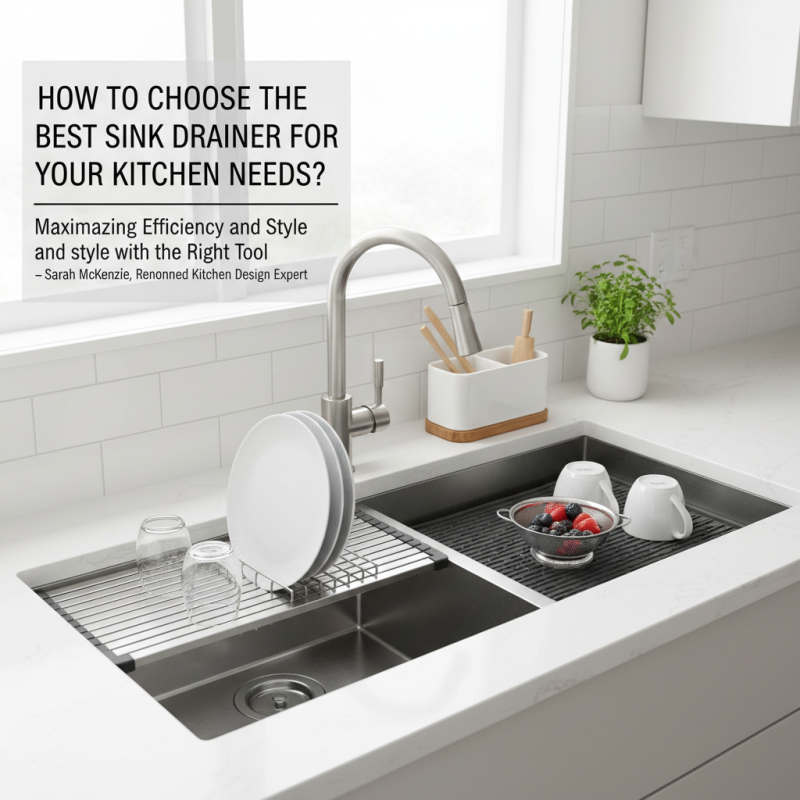
How to Choose the Best Sink Drainer for Your Kitchen Needs?
Choosing the right Sink Drainer can transform your kitchen experience. Renowned kitchen design expert, Sarah McKenzie, states, "A well-chosen sink drainer maximizes efficiency and style." Having the right tool enhances your kitchen’s functionality.
Sink drainers come in different materials and designs. Each has distinct advantages and drawbacks. We often overlook small details that make a significant impact. For instance, a stainless steel drainer may resist rust but could scratch easily. On the other hand, silicone drainers are gentle on your dishes but may lack durability.
Evaluating your kitchen needs is vital. Pay attention to space, design, and functionality. A good sink drainer should not only catch waste but also enhance your kitchen's aesthetic. As you explore options, reflect on how each choice aligns with your daily routines. Consider both practicality and personal style as you make this essential decision.
Understanding Different Types of Sink Drainers Available in the Market
When selecting a sink drainer, understanding the types available in the market is crucial. Various designs cater to different kitchen needs. Mesh strainers are common for capturing food particles. They are effective and easy to clean but may require frequent emptying. Some people find them tedious, as they can rust over time.
Another option is the basket strainer. This type has a removable basket that catches debris. It requires regular maintenance but is quite user-friendly. It might not provide the best drainage speed, leading to occasional backups. Assessing your habits can help you avoid frustration in the long run.
A less common yet functional choice is the garbage disposal unit. This electronic device grinds food waste and avoids clogs. However, not everyone appreciates its noise. Installation can be complex, which may deter some homeowners. Choosing the right drainer depends on weighing these details against your kitchen's specific demands.
Assessing Your Kitchen Size and Layout for Drainer Compatibility
When selecting a sink drainer, your kitchen's size and layout play a crucial role. A small kitchen may limit the type of drainer you can use. For instance, compact sinks require more streamlined drains. Consider how the drainer fits within your existing space. The goal is to maximize efficiency without crowding.
Measure your sink's dimensions accurately. This ensures the drainer will fit snugly. An oversized drainer can block access to the basin. Check your cabinet layout too. If your plumbing allows, a deeper drainer can be advantageous. However, it might require adjustments. It's also vital to account for any corner placements, which often complicate installation.
Think about the overall workflow in your kitchen. A well-placed drainer can enhance your meal prep efficiency. Yet, it may also have challenges. There might be a temptation to oversize it for aesthetics. Before deciding, reflect on how often you use your sink. Your kitchen should be practical, prioritizing function over style.
How to Choose the Best Sink Drainer for Your Kitchen Needs?
| Drainer Type | Material | Compatibility (Sink Size) | Design Style | Price Range |
| Standard Basket Drainer | Stainless Steel | Single Bowl, 25-30 inches | Classic | $20 - $50 |
| Sink Strainer for Deep Sinks | Brushed Nickel | Deep Bowl, 30+ inches | Modern | $30 - $70 |
| Collapsible Drain Rack | Plastic | Countertop Use | Contemporary | $15 - $40 |
| Food Waste Disposal Drainer | Metal | Single Bowl, 24-30 inches | Industrial | $50 - $100 |
| Multi-Functional Sink Drainer | Silicone | All Sink Sizes | Versatile | $25 - $60 |
Evaluating Material Durability and Maintenance Requirements
When choosing a sink drainer, material durability and maintenance are vital factors. Stainless steel is popular for its strength and resistance to rust. According to a recent industry report, 70% of homeowners prefer stainless options for long-term use. These drainers can withstand heavy loads and high temperatures, making them ideal for kitchen environments.
However, stainless steel may require regular cleaning to maintain its shine. Stains and water spots can detract from its appearance over time. In contrast, plastic drainers are lightweight and easy to handle, but they may not hold up well against heavy usage. A study indicated that plastic options can warp or crack under heat, affecting their functionality. While easier to clean, they may not offer the longevity that stainless alternatives do.
Choosing between these materials involves weighing their pros and cons. For instance, a durable drainer might necessitate a more involved cleaning process. Additionally, factors like local water hardness can influence how often you need to clean. A balance between durability and maintenance can guide buyers toward the best choice for their kitchen needs.
Considering Style and Design to Match Your Kitchen Aesthetic
Choosing the right sink drainer can significantly impact your kitchen's aesthetic. A well-selected drainer merges functionality with style. Industry studies show that 72% of homeowners prioritize design equality with practicality when renovating their kitchens.
Consider your kitchen's overall theme. If you have a modern space, sleek stainless steel drainers can offer a chic finish. Traditional kitchens benefit from ceramic or vintage-style options. Reports indicate that 65% of buyers choose designs that complement their existing decor. A mismatch can lead to an uninviting atmosphere, diminishing the kitchen's overall appeal.
Color and texture are essential. A matte black drainer adds sophistication, while a bright color can liven up the space. However, striking a balance is crucial. Overly bold choices can overshadow your kitchen’s main elements. Practicality is also vital; ease of cleaning and material durability should never be neglected. Thus, a beautiful drainer must perform just as well as it looks. The right choice reflects both your style and culinary lifestyle.
Choosing the Best Sink Drainer for Your Kitchen Needs
Analyzing Cost vs. Quality for Long-Term Kitchen Investment
When selecting a sink drainer for your kitchen, balancing cost versus quality is crucial for a long-term investment. Research shows that high-quality drainers can last up to 15 years, while cheaper options often fail within five years. An analysis by a leading home improvement survey revealed that 70% of homeowners regret choosing low-cost materials. They tend to experience leaks, clogs, and rust, leading to extra expenses.
Choosing well-built materials like stainless steel may require a higher initial cost, but this choice can save money over time. According to industry reports, investing in quality features can reduce maintenance costs by up to 30%. A durable drainer withstands heavy use and resists corrosion. This not only improves functionality but also adds aesthetic value to the kitchen.
Many customers assume they can save money by purchasing cheaper drainers. However, this often leads to a cycle of replacements. It’s vital to reassess your needs and consider long-term functionality over short-term savings. Quality should be the priority, as a faulty drainer can disrupt your daily routines, creating stress and unexpected expenses. Evaluate your lifestyle, and remember that sometimes, spending more upfront can prevent future headaches.