

In 2026, dinosaur outdoor decorations are moving beyond novelty products. They now support garden retail, themed hospitality, family attractions, and seasonal commercial displays. Buyers want memorable shapes, reliable materials, and safer installation. A large Tyrannosaurus near a hotel entrance can create an immediate photo point. Smaller dinosaur figures can guide visitors through a garden path.
Market evidence supports this opportunity. Grand View Research valued the global outdoor furniture market at approximately USD 20.3 billion in 2023. Its report also projects steady growth through 2030, driven by outdoor living and commercial landscaping demand. Dinosaur decorations belong to a narrower category, but they benefit from similar purchasing trends. Outdoor buyers increasingly compare weather resistance, maintenance needs, packaging, and total ownership cost.
The TEA/AECOM Theme Index 2023 recorded about 505 million visits across the world’s top 25 theme parks. This figure shows the continuing power of immersive, recognizable environments. Dinosaur themes remain especially effective because they combine education, excitement, and visual storytelling. However, category data is still limited. Some suppliers make broad market claims without separating permanent installations from seasonal ornaments. Buyers should question unsupported statistics.
This guide examines leading 2026 options for global buyers. It considers fiberglass, resin, metal, lighting, scale, shipping, and customization. Practical evaluation matters. A realistic finish means little if paint peels after one rainy season. Product samples, load specifications, warranty terms, and installation instructions deserve careful review. Sustainable materials also require evidence, not attractive wording alone. The best choice balances appearance, safety, durability, and local climate conditions.
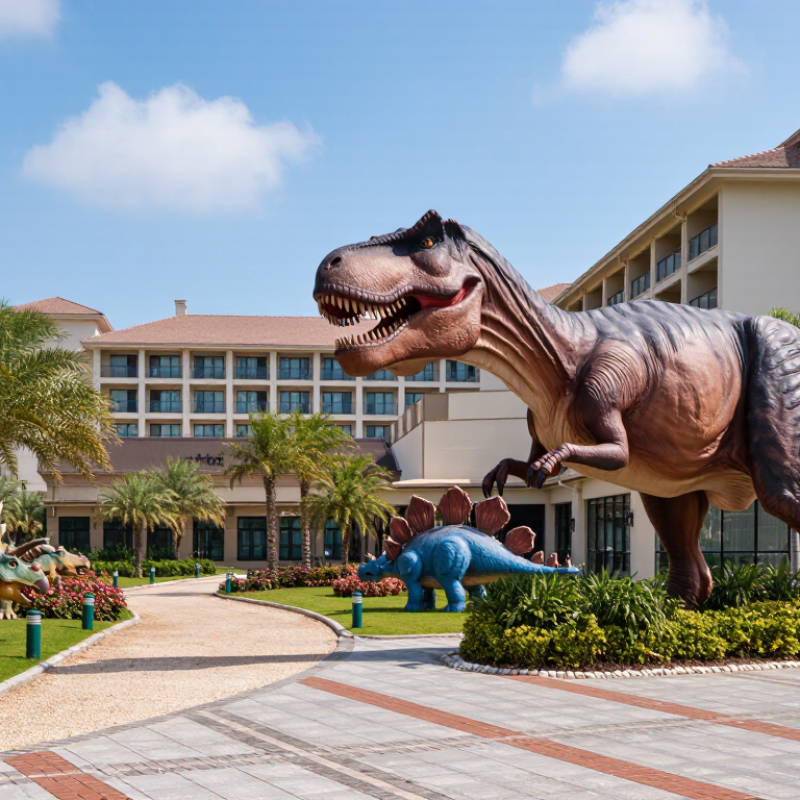
Dinosaur outdoor decorations are becoming more varied for global buyers in 2026. Buyers can choose inflatable dinosaurs, fiberglass sculptures, metal silhouettes, or animated models. Each type suits a different outdoor setting. Inflatable designs are light, colorful, and easy to store. Fiberglass figures create a stronger visual presence near entrances, gardens, and family attractions. Metal silhouettes offer a simpler style for parks, restaurants, and seasonal displays.
Climate should guide the purchase. Humid regions need sealed surfaces and rust-resistant hardware. Cold areas may require flexible materials that resist cracking. Animated dinosaurs attract attention with movement, sound, or controlled lighting, but they need more maintenance. Large models look impressive, yet shipping, installation, and storage become harder. This is where planning can fail. A smaller, well-finished figure may perform better than an oversized decoration.
Tips: Check material thickness, drainage design, wiring protection, and outdoor test records. Ask for installation drawings and replacement-part details. Use low-voltage lighting where suitable, and confirm local electrical requirements before importing. Review wind conditions, public access, and cleaning routines. Avoid choosing only by appearance. That mistake is common. Giant displays can also create unexpected transport costs, especially when packaging is not carefully designed.
Outdoor dinosaur displays face sun, rain, dust, and repeated public contact. Material selection determines how well they survive these conditions. Fiberglass-reinforced plastic offers a strong, lightweight shell with detailed scales and teeth. It also resists moisture better than untreated wood. However, thin fiberglass can crack around joints. Thickness must match the dinosaur’s size and expected wind exposure.
The internal frame usually requires galvanized steel or stainless steel. Galvanized tubing suits many outdoor projects, while stainless steel performs better in coastal air. Welds should be continuous at load-bearing points. Bolts need corrosion-resistant finishes and secure locking systems.
Every display should include a stable base, suitable anchors, and drainage openings. A hollow body without drainage becomes a hidden water tank.
Coatings should include UV-resistant layers, flexible primers, and sealed paint edges. These details reduce fading and surface peeling. Moving or illuminated dinosaurs require protected wiring, weather-rated enclosures, and accessible maintenance panels. Electrical work must follow local safety codes.
Wind calculations should consider the display’s height, shape, and installation surface. A small footprint can be risky. In practice, suppliers sometimes focus too much on appearance and underestimate anchoring. That mistake deserves honest review before shipment. Even a well-finished dinosaur needs inspection after storms, transport, and seasonal temperature changes.
2026 Top Dinosaur Outdoor Decorations for Global Buyers
Choose dinosaur decorations by climate before appearance. The World Meteorological Organization reported that 2024 was the warmest year recorded. Heat, stronger sunlight, and sudden storms now influence outdoor material choices. In hot regions, select UV-resistant coatings, sealed electronics, and pale surfaces that absorb less heat. In wet climates, inspect drainage points, cable covers, and corrosion-resistant frames. Cold areas need flexible materials, stable anchors, and protection against freeze-thaw cracking. My early layouts often looked impressive in drawings but failed around muddy paths. That mistake still matters.
Space and audience should guide scale. Measure entrances, walking lanes, viewing distance, and emergency access before ordering. A towering dinosaur may attract attention, yet it can overwhelm a small courtyard. For young children, rounded edges, gentle movement, and clear sightlines reduce confusion. Older visitors may prefer realistic details and readable information panels. UN Tourism recorded about 1.4 billion international tourist arrivals in 2024, showing why multilingual, family-friendly displays deserve attention. Global buyers should also test sound levels and lighting after sunset. Quiet is sometimes better.
Tips: Photograph the site at noon and night. Mark wind-exposed corners. Leave service access behind every moving unit. Ask suppliers for UV, water-resistance, and load-test documentation. Do not trust a catalog image alone; local weather can expose weaknesses quickly.
| Decoration Type | Typical Size | Recommended Climate | Suitable Space | Best Audience | Key Material and Features | Installation Guidance | Selection Priority |
|---|---|---|---|---|---|---|---|
| Compact T-Rex Statue | 0.8–1.5 m high | Temperate, dry, and mildly humid climates | Small gardens, entrances, balconies, and retail displays | Families, children, casual visitors | UV-resistant fiberglass or treated resin; rounded edges; stable base | Place on level ground and secure the base in windy areas | Footprint, child safety, color retention |
| Large Brachiosaurus Figure | 3–6 m high; 5–10 m long | Dry, temperate, and warm climates with adequate drainage | Theme parks, zoos, museums, resorts, and large public lawns | Tourists, school groups, and large family audiences | Reinforced fiberglass, steel frame, weather-resistant coating | Requires engineered anchoring, professional transport, and exclusion clearance | Structural safety, foundation, viewing distance |
| Animated or Roaring Dinosaur | 1.5–4 m high | Dry and temperate climates; sheltered placement for electronics | Indoor-outdoor attractions, event venues, shopping centers, and parks | Families, entertainment visitors, and social-media audiences | Fiberglass or silicone skin, motorized joints, speakers, weather-protected control box | Use residual-current protection, protected cabling, and scheduled maintenance | Ingress protection, noise level, maintenance access |
| Dinosaur Egg Cluster | 0.5–1.5 m per egg | Most climates when drainage and surface protection are provided | Gardens, pathways, photo zones, school courtyards, and compact venues | Young children, families, students, and photographers | Molded fiberglass, resin, or reinforced concrete; low center of gravity | Use non-slip placement and avoid blocking accessible routes | Tactile safety, cleaning, pedestrian flow |
| Dinosaur Footprint Trail | 0.4–1.2 m per footprint | Wet, humid, coastal, and temperate climates with slip-resistant finishing | Walking paths, educational gardens, museums, and playground approaches | Students, children, educators, and active visitors | Cast concrete, stone composite, or textured resin; abrasion-resistant surface | Install flush with the path or clearly mark height changes | Slip resistance, accessibility, drainage |
| LED Dinosaur Silhouette | 1.5–4 m wide | Cold, temperate, and dry climates; use sealed components in wet regions | Night markets, plazas, event entrances, gardens, and seasonal displays | General public, evening visitors, families, and event guests | Powder-coated steel or aluminum frame; low-voltage LED lighting | Secure against wind, protect connectors, and route cables away from foot traffic | Electrical safety, visibility, energy use |
| Inflatable Dinosaur | 2–8 m high | Dry, calm weather; not suitable for severe storms or persistent strong winds | Temporary events, fairs, school functions, promotions, and indoor halls | Children, event attendees, and promotional audiences | Coated PVC or Oxford fabric; blower, tie-downs, and repair kit | Follow wind limits supplied with the product and deflate during severe weather | Wind management, blower reliability, storage |
| Cold-Climate Dinosaur Display | 1–3 m high | Snowy, freezing, and freeze-thaw climates | Winter attractions, ski resorts, public squares, and outdoor education areas | Tourists, families, winter event visitors, and students | Cold-flexible coating, corrosion-resistant fasteners, sealed joints, and weighted base | Prevent trapped water, remove heavy snow loads, and inspect after freeze-thaw cycles | Temperature tolerance, corrosion control, snow load |
| Coastal or Tropical Dinosaur Statue | 1.5–4 m high | Hot, humid, coastal, and high-UV climates | Beach resorts, botanical gardens, water parks, promenades, and outdoor malls | Tourists, families, resort guests, and outdoor photographers | UV-stable fiberglass, marine-grade coating, stainless or galvanized hardware | Provide drainage, inspect for coating damage, and rinse salt deposits regularly | UV resistance, salt corrosion, moisture management |
General buying note: Final selection should be checked against local building rules, electrical requirements, accessibility standards, expected wind conditions, snow loads, and the manufacturer’s installation and maintenance instructions.
Outdoor dinosaur displays must survive weather, handling, and public contact. Safety begins with stable foundations, rounded edges, and protected moving parts. Wind loading matters, especially for tall fiberglass or inflatable models. Buyers should request anchoring drawings and tested wind limits, not rely on attractive product images.
The NFPA report Home Structure Fires Involving Christmas Trees and Holiday Decorations estimates about 790 decoration-related home fires annually in the United States. These incidents caused approximately 34 million dollars in yearly property damage during 2016–2020. The data is not dinosaur-specific, but it highlights electrical and heat-related risks. Use outdoor-rated cables, sealed connectors, and residual-current protection where required. Keep wiring away from puddles and walking routes. Weather changes fast.
Tips: Check the IP rating, anchoring points, cable strain relief, and emergency shut-off before installation. Choose materials tested under ISO 4892-3 or comparable ultraviolet exposure methods. Ask for test conditions and failure results. A certificate without details is weak evidence.
Maintenance should follow a written inspection log. Inspect seams, bolts, paint, lighting covers, and control boxes after severe weather. Look for chalky surfaces, rust stains, loose anchors, and water inside housings. Clean with mild detergent, soft cloths, and fresh water. Avoid aggressive solvents, which can weaken coatings. Replace damaged cables immediately. Keep spare fasteners and seals on site. Perfect maintenance plans do not exist. Still, small records prevent expensive guesses.
Global buying needs more than a striking Tyrannosaurus silhouette. DHL’s 2024 E-Commerce Trends Report states that 59% of shoppers buy from overseas retailers. Buyers should request material samples, assembly drawings, carton dimensions, and tested color references. A 2.4-meter outdoor dinosaur may look manageable, but its crate can exceed standard warehouse-door limits. That detail matters.
Customization should define anatomy, pose, texture, lighting, anchoring, and weather resistance. Ask for UV-stability data, drainage design, wind-load calculations, and flame-performance documents where required. Do not assume one certificate works worldwide. A decorative figure may face different rules if it includes wiring, sound modules, or child-accessible features. Local authorities may also require electrical testing, labeling, or installation approval. Compliance is not decoration.
Shipping plans should include HS-code confirmation, country-of-origin marking, moisture barriers, spare parts, and replacement panels. UNCTAD’s Review of Maritime Transport 2024 highlights continuing exposure to route disruption and freight volatility. Therefore, compare sea, rail, and air options before production starts. Air freight saves time, not money. Sea freight saves cost, sometimes. Grand View Research continues to report growth across outdoor living markets, yet demand forecasts are not guarantees. A careful buyer should budget for inspection, port storage, customs delays, and imperfect packaging. Even experienced suppliers can miss one small bolt.

